

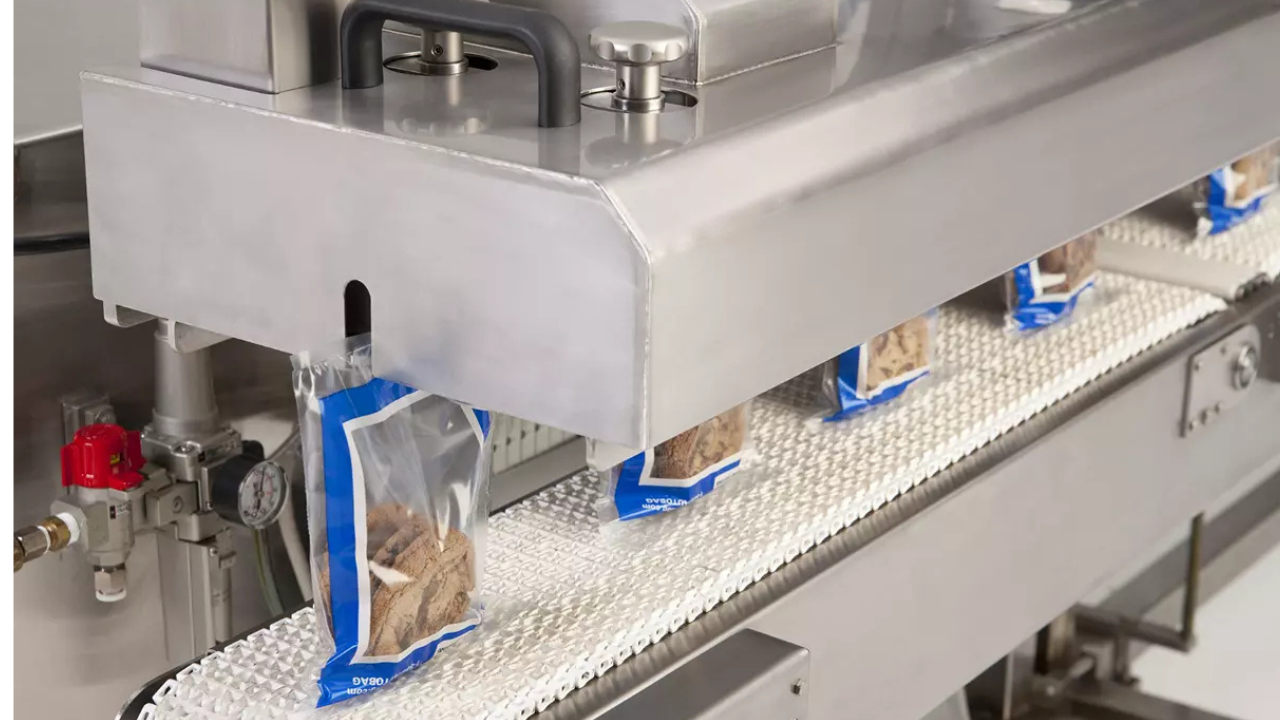
Pouch Packing Machine: A Detailed Guide to Modern Pouch Packaging
A pouch packing machine is a specialised packaging system designed to fill and seal products inside flexible pouches quickly, accurately, and consistently. Depending on the machine configuration, it can form a pouch from a continuous roll of film or automatically handle pouches that have already been manufactured. These systems are now widely used for products ranging from snacks, spices, rice, coffee, and pet food to pharmaceutical powders, cosmetics, detergents, sauces, and other consumer goods. The global pouch packaging machine market is receiving increasing attention as flexible packaging continues to expand, with one current 2026 forecast estimating the market at $52.96 billion in 2026 and $81.71 billion by 2034, representing a projected CAGR of 5.57%.
The appeal of pouch packaging is easy to understand. A pouch can be lightweight, visually attractive, easy to transport, convenient to open, and available in numerous formats, including flat pouches, stand-up pouches, zipper bags, gusseted bags, and spouted designs. For manufacturers, pouches can also provide efficient use of packaging material and can be produced at high speeds when the machine and product are properly matched. But buying a pouch packing machine is not simply a matter of choosing the fastest model available. The right machine depends on the product’s physical characteristics, desired pouch format, filling accuracy, production volume, packaging material, sealing requirements, automation level, and future business plans. A machine that performs beautifully with rice or snacks may be completely unsuitable for a thick sauce or delicate pharmaceutical product.
What Is a Pouch Packing Machine?
A pouch packing machine automates the process of preparing flexible pouches, putting products inside them, and closing the packages. Depending on the equipment, the process can also include weighing, dosing, vacuuming, gas flushing, coding, date printing, inspection, checkweighing, and discharge. Modern systems can be connected to upstream product feeders and downstream equipment such as conveyors, metal detectors, checkweighers, cartoners, and case packers.
There are two fundamental approaches to pouch production. A form-fill-seal machine starts with a roll of flexible film and creates the pouch during the packaging process. A premade pouch machine, on the other hand, receives pouches that have already been formed and focuses on opening, filling, sealing, and sometimes closing or handling specialized pouch features. Current industry guides identify VFFS, HFFS, and premade pouch machines as the major categories, with each configuration suited to different products and pouch formats.
Why Pouch Packaging Has Become So Popular
Pouches have changed the way many products are presented to consumers. A traditional rigid container can require considerably more material and space, while a flexible pouch can be lightweight and compact. A stand-up pouch can also provide a large printable surface, giving brands plenty of room for product information, graphics, instructions, and marketing messages. Add features such as resealable zippers, tear notches, handles, windows, spouts, and specialized barrier films, and the humble pouch becomes a remarkably versatile packaging format.
From the manufacturer’s perspective, the attraction is just as strong. Rollstock film can be formed directly into bags on VFFS equipment, eliminating the need to purchase and handle individual empty bags. Premade-pouch systems provide access to more sophisticated shapes and features when presentation is important. Current industry analysis also points to lightweight and convenient flexible packaging as an important factor supporting demand for pouch packaging machinery.
The result is a packaging format that sits at the intersection of efficiency, convenience, branding, and product protection. It is not surprising that pouches have become common across food, pharmaceutical, personal-care, household, and pet-food applications.
How Does a Pouch Packing Machine Work?
Although pouch machines can look complicated, their basic workflow is fairly logical. The machine first receives packaging material and product. It then creates or positions the pouch, measures the required quantity of product, places the product inside, seals the opening, and discharges the finished package. Additional systems can perform coding, inspection, weighing, metal detection, vacuuming, nitrogen flushing, or secondary packaging.
The exact sequence depends on the machine type. A VFFS machine creates the pouch directly from film, while a premade-pouch machine handles an already manufactured bag. A rotary premade-pouch system can use multiple stations for bag pickup, coding, opening, filling, cleaning, sealing, cooling, and discharge. Current technical guides describe rotary systems using this multi-station approach to create a continuous automated process.
Product Feeding and Dosing
One of the most important parts of any pouch packing machine is the filling or dosing system. The packaging machine can only produce reliable results if it receives the correct quantity of product at the correct time. Different products therefore require different filling technologies.
Powders commonly use auger fillers, while free-flowing granules may use volumetric cup fillers or weighing systems. Irregular products such as chips, nuts, and dry fruits often benefit from multihead weighers because the machine can combine individual weighed portions to achieve the target weight. Liquids and pastes may require pumps, piston fillers, or flow-based systems. Current machine offerings demonstrate this range, with systems designed specifically for powders, granules, snacks, and different pack sizes using augers, cups, and multihead weighers.
The product itself can make the filling process surprisingly difficult. Powder may bridge inside a hopper, sticky material can cling to equipment, and fragile snacks can break when they fall too aggressively. Good machine design therefore does more than measure quantity. It manages product flow, speed, accuracy, and handling at the same time.
Pouch Forming, Filling, and Sealing
In a VFFS system, a roll of film moves through the machine and passes around a forming collar or tube. The film is shaped into a tube, a longitudinal seal is created, and the machine forms the bottom of the pouch. Product is then introduced through the forming tube before the upper seal is created. The machine cuts between packages, producing individual pouches in a continuous sequence. PMMI’s technical material describes VFFS equipment as machines that form bags from rollstock, fill them vertically, and seal them as part of a continuous process.
The sealing stage deserves particular attention because a beautiful pouch is useless if the seal fails. Heat, pressure, dwell time, film composition, and contamination can all affect seal quality. Food and powder applications can be especially challenging because product particles may enter the seal area. More sophisticated systems can use controlled sealing jaws, product settling, dust removal, and other mechanisms to improve seal integrity.
For sensitive food products, the machine may also introduce nitrogen or another gas before sealing. PMMI notes that gas flushing can be used in pillow pouches to help protect products such as potato chips and other snacks. This shows how pouch machinery can become part of the product-preservation strategy rather than simply a bag-making device.
Main Types of Pouch Packing Machines
There is no single pouch machine that works equally well for every application. The three major categories—VFFS, HFFS, and premade pouch machines—differ in how they handle packaging material and products.
Choosing between them starts with understanding what you are trying to package. Are you producing thousands of small spice bags? Filling premium stand-up zipper pouches? Packaging delicate confectionery? Filling liquid detergent? Producing single-use pharmaceutical sachets? Each situation can lead to a different machine recommendation.
Vertical Form-Fill-Seal Machines
Vertical Form-Fill-Seal (VFFS) machines are among the most widely used pouch packaging systems. They take a roll of flexible film and perform forming, filling, sealing, and cutting in a vertical arrangement. The vertical orientation is particularly useful for products that can be fed downward through gravity, which is why VFFS equipment is commonly associated with powders, grains, snacks, seeds, coffee, spices, and other dry products.
One of the biggest advantages is efficiency. Because the machine creates the bag and packages the product in the same process, it can reduce material handling and packaging steps. Roll film can also be economical compared with individually manufactured pouches. Some modern VFFS systems can produce pillow bags, gusseted bags, and, with additional equipment, certain stand-up or zipper formats.
However, VFFS is not automatically the best choice for every product. Delicate, sticky, irregular, or highly viscous products may require different feeding and packaging arrangements. The correct machine needs to be selected around the product’s behavior, not simply the desired output number.
Horizontal Form-Fill-Seal Machines
Horizontal Form-Fill-Seal (HFFS) machines create and seal packaging in a horizontal orientation. This configuration can provide greater control for products that need support while being packaged or for applications where a horizontal workflow makes more sense. Current industry guidance associates HFFS systems with products such as bars, bakery goods, medical consumables, and other items that may not be ideally suited to gravity-based vertical filling.
Never Miss : Packing Machine
The major advantage is controlled product handling. Instead of dropping a product vertically into a pouch, the machine can transport the product horizontally through forming and sealing stages. This can be useful for delicate or regularly shaped products. HFFS machines can also create attractive package formats and are frequently used where appearance and precise package dimensions matter.
For businesses choosing between VFFS and HFFS, the decision should therefore consider product characteristics, package style, speed, film structure, sealing requirements, and available floor space.
Premade Pouch Packing Machines
A premade pouch packing machine does not make the pouch itself. Instead, it receives finished pouches and automatically performs operations such as pouch feeding, opening, filling, sealing, coding, and discharge. This arrangement is especially useful when manufacturers want sophisticated pouch designs such as stand-up bags, zipper pouches, spouted pouches, or specialty shapes.
The tradeoff is that premade pouches generally require an additional pouch-manufacturing step before they reach the filling machine. That can increase packaging-material costs compared with rollstock, but it opens the door to premium formats and features. If your product competes heavily on shelf appearance, convenience, and packaging design, this flexibility can be worth the additional cost.
Rotary premade-pouch machines are particularly interesting for high-volume operations. Multiple stations arranged around a rotating system can perform sequential operations without requiring separate machines for each step. This can create a compact and highly automated packaging process.
Different Pouch Formats
Pouch packaging is not one-size-fits-all. Flat pouches, stand-up pouches, gusseted bags, zipper pouches, spouted pouches, sachets, and specialty-shaped packages all have different characteristics.
Flat pouches are often economical and suitable for single-use products, samples, powders, sauces, and other small quantities. Stand-up pouches provide greater shelf presence and can incorporate zippers, handles, windows, or spouts. Gusseted pouches expand when filled, allowing greater capacity while maintaining a relatively compact footprint.
Resealable pouches have become especially valuable for products that consumers use repeatedly. Pet food, snacks, coffee, dried fruit, detergents, and household products can benefit from zipper closures. Spouted pouches are useful for liquids, sauces, baby products, beverages, and other products that need controlled dispensing.
The machine must be compatible with the pouch construction. A system designed for basic three-side-seal bags cannot necessarily handle every zipper, spout, or shaped format without additional equipment. This is one reason manufacturers should finalize the packaging format before selecting the machine.
Stand-Up, Flat, Gusseted, and Zipper Pouches
Stand-up pouches are particularly attractive for retail products because they can stand vertically on shelves and provide a large branding area. Their construction can also incorporate resealable closures and handles, making them convenient for consumers.
Flat pouches are simpler and often well suited to small portions, sachets, samples, and products where compact packaging is important. Gusseted pouches add folds to the sides or bottom, increasing the usable volume of the package. Zipper pouches add resealability, which can improve convenience and potentially help protect the product after opening.
The important point is that pouch design and machinery should be considered together. A packaging designer might create an excellent pouch concept, but the machine must be capable of feeding, opening, filling, and sealing that specific structure reliably.
Pouch Packing Machines for Different Products
Product characteristics are perhaps the single biggest factor in machine selection. A pouch machine designed for a free-flowing product may struggle with a powder that compacts or a liquid that splashes. This is why equipment suppliers often offer multiple filling systems that can be integrated with the same basic pouching platform.
A current 2026 machine catalog, for example, lists servo auger fillers for powders, cup fillers for granular products, and multihead weigh fillers for irregular snacks, demonstrating how different dosing technologies are matched to product behavior.
Powder and Granule Products
Powders are among the most common products packed in pouches. Spices, flour, instant coffee, detergent, nutritional powders, pharmaceutical powders, and similar products can all require accurate dosing. An auger filler is often used because its rotating screw can control the amount of powder delivered into the pouch.
Granular products behave differently. Rice, sugar, pulses, seeds, salt, and similar products can often be measured through volumetric cups or weighing systems. Snacks such as chips and nuts may require multihead weighers because individual pieces vary in size and weight.
Accuracy is not the only concern. Product dust can contaminate the sealing area, creating weak seals. Modern systems therefore need to balance filling speed with clean package formation. This is particularly important when the product has a high commercial value, because product giveaway can quickly become expensive.
Liquid, Paste, and Semi-Liquid Products
Liquid and semi-liquid products require specialized filling equipment. Water-like beverages can be handled differently from thick sauces, creams, oils, detergents, or pastes. Pumps and piston fillers are common approaches, with machine configuration determined by viscosity and desired fill accuracy.
Liquid packaging creates an additional sealing challenge because the product can contaminate the seal area. The machine must therefore control filling height and pouch movement carefully. For certain products, the package may also require a spout or special closure system.
The combination of pouch flexibility and liquid products is particularly attractive because flexible packages can be lightweight and convenient. But the machinery needs to be designed for leak prevention, accurate filling, clean sealing, and reliable pouch handling.
Industries Using Pouch Packing Machines
Pouch packing machines are used across numerous industries because the format can be adapted to very different products. Food and beverage is perhaps the most visible sector, with pouches used for snacks, spices, coffee, grains, sauces, confectionery, ready-to-eat foods, and pet food. Pharmaceutical and nutraceutical manufacturers use pouch and sachet formats for powders, granules, tablets, and other products.
The cosmetics and personal-care sector also benefits from pouches for creams, shampoos, gels, lotions, and refill products. Household products such as detergents and cleaning formulations can be packaged in flexible bags as well. Current market segmentation identifies food and beverage, pharmaceuticals, personal care and cosmetics, pet food, and household products among the key end-user categories for pouch packaging machinery.
This diversity is important because it demonstrates that pouch machinery is not tied to one product category. A manufacturer can select equipment according to the product and packaging format, creating a flexible production platform that can potentially support multiple SKUs.
Key Features of Modern Pouch Packing Machines
Modern machines can incorporate a long list of features, but not every feature is equally important for every manufacturer. Some common capabilities include PLC controls, touchscreen HMIs, servo-driven film movement, automatic film tracking, temperature control, programmable recipes, sensor-based detection, coding systems, and automated rejection.
Servo technology is particularly useful because it allows precise control over movement. A current commercial pouch machine, for example, describes two-axis servo control for film pulling, bag formation, and sealing. This type of motion control can improve repeatability and make it easier to adjust machine parameters for different pouch sizes.
Other features can include automatic film tension control, registration-mark detection, no-film/no-fill systems, pouch-presence sensors, seal-temperature monitoring, and integrated coding. The more advanced the machine, the more important operator training becomes. A sophisticated control system is valuable only when operators understand how to use it.
Automation, Servo Technology, and Smart Controls
The modern pouch packing machine is increasingly becoming a smart production system rather than a simple mechanical bagger. Servo motors can provide precise movement, while PLCs coordinate machine functions and HMIs allow operators to change recipes and monitor operating conditions. Sensors can detect film position, pouch presence, temperature, product flow, and other variables.
This level of automation provides an important advantage when factories produce multiple SKUs. Instead of manually adjusting every mechanical component each time a package size changes, operators can use stored recipes and controlled adjustments. That can reduce setup time and improve repeatability.
Data is becoming important too. A connected machine can potentially provide information about production count, downtime, alarms, rejects, and machine performance. When that information is integrated into a broader manufacturing system, managers can identify bottlenecks and maintenance issues more quickly.
The broader trend is toward Industry 4.0 packaging, where machines communicate with other equipment instead of operating as isolated units. This is especially useful for larger factories where pouch packaging is part of a complete automated production line.
Benefits of Pouch Packing Machines
The business benefits of pouch packaging machinery can be substantial. First is production speed. A properly configured automatic system can package considerably more units than manual labor while maintaining consistent timing. Actual speed varies greatly by product, pouch format, filling method, and machine design, so advertised maximum speeds should always be tested under realistic production conditions.
Second is filling consistency. Automated weighing and dosing systems can reduce variation and help control product giveaway. Third is seal consistency. A properly controlled sealing system can produce repeatable package closures, reducing the risk of leaks or contamination.
Other benefits include:
| Benefit | Business Impact |
|---|---|
| Higher production output | Supports larger orders and business growth |
| Accurate dosing | Reduces product giveaway |
| Consistent sealing | Improves package integrity |
| Lower repetitive labor | Reduces dependence on manual packing |
| Better hygiene | Limits unnecessary product handling |
| Flexible pouch formats | Supports multiple product lines |
| Automated coding | Improves traceability |
| Reduced material waste | Improves packaging economics |
| Better presentation | Creates consistent retail-ready packages |
| Easier scaling | Supports higher production volumes |
The most important benefit, however, is consistency at scale. A company can manually produce excellent pouches, but maintaining the same quality across thousands or millions of packages is a different challenge. Automation gives the manufacturer a repeatable process that can be measured, monitored, and improved.
Sustainable Pouch Packaging Trends
Sustainability is becoming an increasingly important consideration in pouch packaging. Flexible packaging can reduce material use and transportation weight compared with some rigid alternatives, but the environmental impact depends on the entire package system, including material composition, production, recyclability, collection infrastructure, and end-of-life treatment.
Modern machinery therefore needs to accommodate changing packaging materials. Manufacturers are experimenting with recyclable mono-material structures, recycled-content films, thinner films, and other alternatives. Current 2026 market analysis specifically identifies plastic films, aluminum foil, and compostable materials within the pouch packaging machine market segmentation.
The challenge is that new films can behave differently during forming and sealing. A material change that looks simple from a packaging-design perspective may require different machine temperatures, pressure settings, sealing jaws, film tension, or control parameters. This means sustainable packaging innovation is also becoming a machinery-engineering challenge.
Manufacturers should therefore ask suppliers whether the machine can handle future packaging materials rather than optimizing the equipment for only today’s film. Flexibility can protect the investment as packaging regulations, consumer expectations, and material technology evolve.
How to Choose the Right Pouch Packing Machine
Choosing the right machine starts with answering a deceptively simple question: What exactly are you trying to pack? You need to define the product, pouch style, package weight, production target, material, filling accuracy, sealing requirements, and desired automation level before comparing machines.
The following factors deserve particular attention:
- Product characteristics: powder, granule, liquid, paste, snack, irregular solid, or fragile product.
- Pouch format: flat, pillow, stand-up, gusseted, zipper, spouted, or specialty shape.
- Pack size: minimum and maximum pouch dimensions and filling weight.
- Production volume: required pouches per minute or per shift.
- Filling accuracy: particularly important for expensive or regulated products.
- Packaging material: film type, laminate structure, thickness, and sealing characteristics.
- Automation: manual, semi-automatic, or fully automatic.
- Changeover requirements: how frequently the machine will switch products or pouch sizes.
- Available space: machine footprint, conveyors, elevators, and auxiliary equipment.
- Service support: spare parts, installation, training, and technical assistance.
A manufacturer should also request a live production demonstration using its actual product and packaging film. This can reveal problems that a brochure cannot. Does the product flow properly? Is the pouch sealed reliably? Does powder enter the seal? Can the machine achieve the desired output? How much product is wasted? How long does a changeover take?
These questions matter far more than simply asking, “How many pouches per minute can it produce?”
Maintenance, Safety, and Operating Costs
A pouch packing machine is a production investment, and maintenance has a direct effect on profitability. Regular inspections should cover sealing jaws, cutting mechanisms, belts, bearings, sensors, pneumatic components, film-handling systems, electrical connections, and product-contact areas. Cleaning requirements vary by product, with food, pharmaceutical, chemical, and cosmetic applications requiring different procedures.
Operators should also be trained in safe machine operation. Automated equipment contains moving components, heated sealing areas, electrical systems, and sometimes pneumatic or vacuum equipment. Safety guards, emergency stops, interlocks, and documented procedures should be treated as essential equipment rather than optional extras.
Operating costs go beyond electricity. Manufacturers should account for film waste, rejected pouches, compressed air, spare parts, lubrication, maintenance labor, downtime, consumables, and operator requirements. A machine with a low purchase price may not be the cheapest machine over five or ten years.
For high-volume production, uptime is particularly important. If a pouch machine stops for several hours, the financial impact can extend beyond the machine itself because upstream production may have to slow down and downstream workers may have nothing to package. A reliable service network can therefore be as valuable as a sophisticated machine specification.
Future Outlook for Pouch Packing Machines
The future of pouch packing machines is likely to be defined by automation, flexibility, digital controls, improved sustainability, and more sophisticated package formats. Manufacturers want higher output, but they also want machines capable of handling frequent product changes and increasingly complex packaging designs.
Premade-pouch systems are likely to remain important for premium packaging because they can accommodate stand-up bags, zippers, spouts, and other specialized features. VFFS systems will continue to be attractive for high-volume dry products because they combine film forming, filling, and sealing in a compact process. HFFS technology will remain relevant for products that require horizontal handling or specific package formats.
The market outlook also supports continued investment. Fortune Business Insights currently forecasts the pouch packaging machine market to grow from $52.96 billion in 2026 to $81.71 billion by 2034. Another current market estimate puts pouch packaging machinery at approximately $10.5 billion in 2026, highlighting how different definitions can produce dramatically different market totals. These figures should not be combined directly, but together they demonstrate strong industry interest and the importance of understanding the exact market definition used by each research provider.
Over time, machines are likely to become easier to monitor, faster to change over, more energy efficient, and better integrated with factory software. Artificial intelligence and machine vision may also play a larger role in quality inspection and predictive maintenance. The most valuable machines will not necessarily be the ones with the longest feature list. They will be the machines that deliver reliable production, measurable efficiency, flexible packaging capabilities, and a strong return on investment.
Conclusion
A pouch packing machine is an essential piece of modern packaging equipment for businesses that need to fill and seal flexible pouches accurately and efficiently. From snacks and spices to coffee, rice, detergents, sauces, pharmaceutical products, cosmetics, and pet food, pouch packaging has become a practical solution for a remarkably broad range of products.
The key to successful pouch packaging is choosing machinery that matches the product and package. VFFS machines are highly suitable for many dry, free-flowing products and can create bags directly from roll film. HFFS machines provide a horizontal packaging approach for products that require different handling. Premade pouch machines are particularly useful for premium formats such as stand-up, zipper, and spouted pouches. Each technology has advantages, and none should be considered universally superior.
Modern equipment is also becoming increasingly intelligent. Servo motion, PLC controls, touchscreen interfaces, sensors, automated film tracking, weighing systems, coding, inspection, and connected production data are transforming pouch machines into sophisticated manufacturing systems. At the same time, sustainability is pushing machinery manufacturers to accommodate new film structures and packaging concepts.
For anyone considering a pouch packing machine, the most important advice is straightforward: start with the product, define the pouch, calculate the real production requirement, test the machine with actual materials, and evaluate total cost of ownership rather than purchase price alone. When the equipment is correctly matched to the application, a pouch packing machine can improve productivity, consistency, package quality, and long-term manufacturing efficiency.
Frequently Asked Questions
1. What is a pouch packing machine?
A pouch packing machine is equipment that automatically forms or handles flexible pouches, fills them with products, seals them, and often performs additional operations such as coding, weighing, inspection, and discharge. Machines can work with roll film or premade pouches depending on the design.
2. What products can be packed in a pouch packing machine?
Pouch machines can package powders, granules, snacks, grains, spices, coffee, liquids, sauces, pastes, detergents, pharmaceutical products, cosmetics, pet food, and many other products. The filling technology must be selected according to the product’s physical characteristics.
3. What is the difference between VFFS and premade pouch machines?
A VFFS machine makes the pouch from roll film while simultaneously filling and sealing it. A premade pouch machine receives already manufactured pouches, opens them, fills them, and seals them. VFFS can be attractive for high-volume production and material efficiency, while premade systems provide greater flexibility for complex formats such as zipper, stand-up, and spouted pouches.
4. How fast can a pouch packing machine operate?
Speed varies substantially according to the product, pouch size, filling method, machine design, and number of lanes. Some commercial VFFS systems advertise outputs of around 100 pouches per minute, while other machines can operate faster or slower depending on the application. The advertised maximum should always be distinguished from achievable production speed under real factory conditions.
5. How do I choose the best pouch packing machine?
Start by identifying your product, filling weight, pouch format, packaging material, target output, required accuracy, changeover frequency, available space, and automation needs. Then test potential machines with your actual product and film. Finally, compare total ownership costs—including maintenance, spare parts, energy, labor, waste, service, and downtime—not just the initial machine price.Output in