

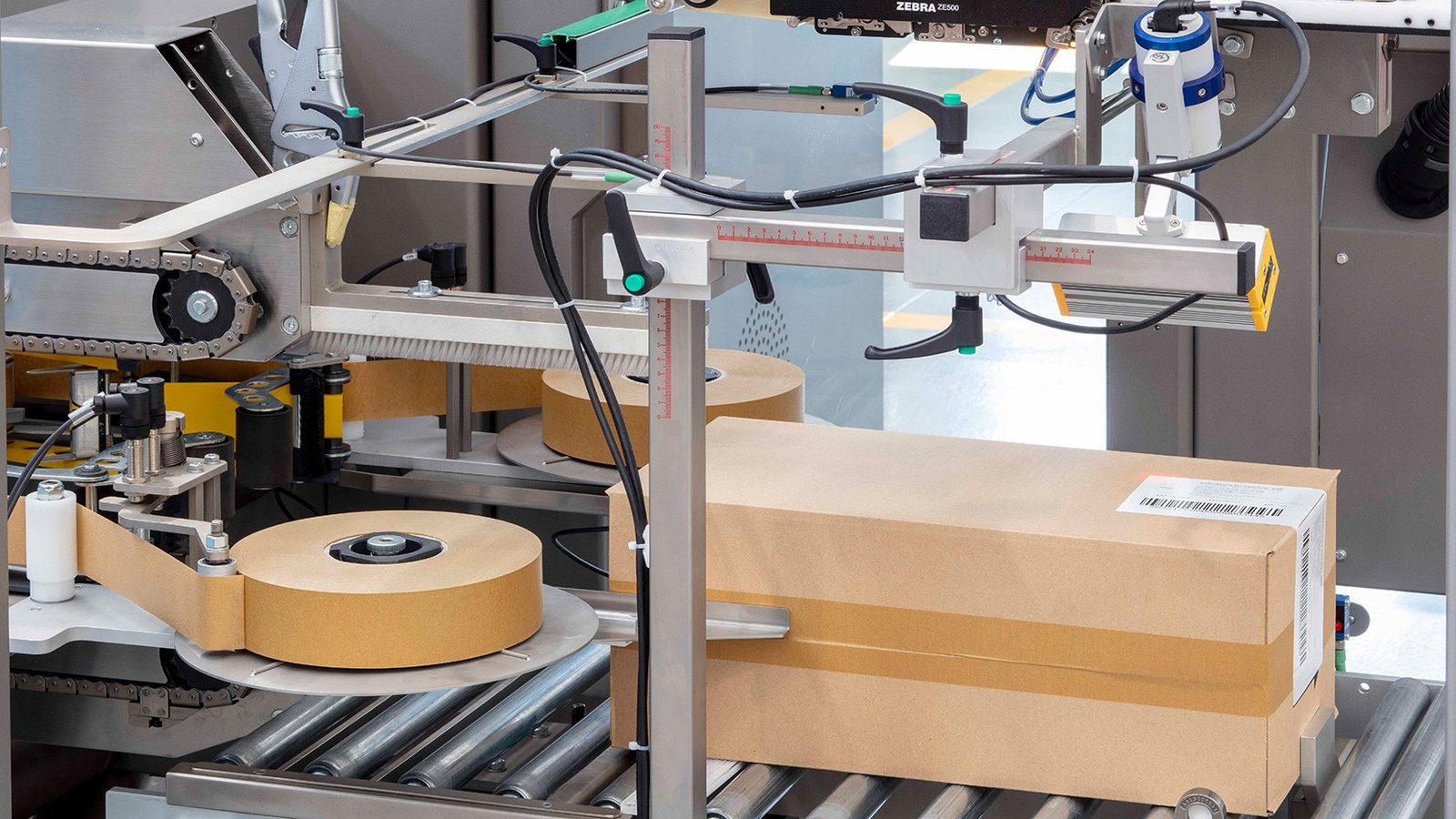
Packing Machine: A Detailed Guide to Modern Packaging Equipment
A packing machine is one of the most important pieces of equipment in modern manufacturing because it transforms finished products into consistent, protected, transport-ready packages. From a small bag of snacks to a pharmaceutical carton, a bottle of liquid, a box of consumer goods, or a pallet of industrial products, packaging machinery sits between production and distribution. What once required large amounts of repetitive manual labor can now be completed through automated systems that measure, fill, wrap, seal, label, inspect, count, carton, and palletize products. Current industry research shows just how significant this equipment category has become: one 2026 market study estimates the global packaging machinery market at $64.3 billion in 2026, with projected growth to $91.9 billion by 2033, while another current forecast puts the 2026 market at $82.24 billion, illustrating how market estimates vary according to definitions and segmentation.
The reason behind this continued investment is easy to understand. Manufacturers need to produce more units with fewer errors while dealing with labor shortages, changing consumer preferences, greater product variety, sustainability requirements, and pressure to control operating costs. Packaging equipment can provide repeatability that is difficult to achieve when every package depends on manual handling. At the same time, today’s machines are becoming more flexible and intelligent, with programmable controls, sensors, robotics, connectivity, and increasingly sophisticated data capabilities. The packaging industry is consequently moving away from the idea of a packing machine as a simple mechanical device and toward a broader concept: a connected production system designed to improve speed, quality, safety, flexibility, and resource efficiency.
What Is a Packing Machine?
A packing machine is industrial equipment designed to automate one or more steps involved in preparing products for storage, transportation, retail, or final consumption. Depending on the machine, the process can involve feeding a product, measuring or counting it, forming a package, filling the package, sealing it, labeling it, coding it, inspecting it, or transferring it to another packaging stage. Packaging machinery covers a very wide range of technologies, including filling machines, form-fill-seal equipment, cartoners, wrappers, case packers, labeling systems, palletizers, and inspection equipment. A current 2026 industry guide describes packaging machinery as equipment used for filling, sealing, labeling, wrapping, weighing, strapping, palletizing, and related operations.
That broad definition matters because there is no single machine that can be called the “best packing machine” for every application. A manufacturer packaging coffee powder needs a very different system from a pharmaceutical company packing tablets or a beverage producer filling bottles. Even within the same industry, the ideal equipment can change depending on package dimensions, material, production volume, product characteristics, required accuracy, hygiene standards, available floor space, and desired automation level. The right way to approach a packing-machine purchase is therefore to begin with the product and packaging process, rather than beginning with a machine name. Once those requirements are understood, the appropriate equipment category becomes much easier to identify.
How a Packing Machine Works
Although designs vary considerably, most packing machines follow a logical sequence. First, the product is supplied to the machine through a hopper, conveyor, feeder, pump, auger, weighing system, robotic mechanism, or another feeding device. The machine then measures, counts, portions, or positions the product according to the required package specification. After that, the product enters its packaging material, container, carton, pouch, tray, bottle, bag, or case before the machine performs a closing or sealing operation.
The final stages can include printing batch numbers, applying labels, checking package weight, detecting foreign objects or defects, rejecting nonconforming units, and transferring finished packages to secondary or tertiary packaging. In an automated line, these operations may be coordinated through PLCs, servo drives, sensors, cameras, conveyors, robotics, and human-machine interfaces. The result is a synchronized process where each station performs a specific job without requiring an operator to manually move every product from one stage to the next. This synchronization is one reason modern packing machinery can dramatically improve consistency and throughput when compared with highly manual processes.
Why Packing Machines Are Important
The importance of packing machinery extends far beyond labor savings. Packaging protects products from contamination, moisture, impact, tampering, deterioration, and handling damage. For food and pharmaceutical products, packaging can be directly connected to hygiene and product safety. For consumer goods, it can influence shelf presentation and brand identity. For industrial products, appropriate packaging can reduce transportation damage and make storage and handling more efficient.
A packing machine also creates standardization. Imagine a factory producing thousands of packages per shift. If every package is filled, sealed, and labeled manually, even a small variation in the process can multiply into significant waste or quality problems. Automated equipment can control filling quantities, sealing pressure, temperature, timing, label position, and other parameters with much greater consistency. This does not mean automation eliminates every defect; machines still require correct setup, maintenance, quality control, and trained personnel. But when properly designed and operated, they create a much more repeatable manufacturing environment.
The economic argument is equally compelling. Packaging machinery can reduce repetitive labor requirements, improve line throughput, lower material waste, and help manufacturers respond to larger orders. Current packaging-industry research shows that labor availability, operational efficiency, and return on investment are major considerations behind automation decisions. Packaging World reported in its 2026 outlook that nearly seven in ten CPG respondents planned to add automation, cobots, or robotics during 2026, with end-of-line and secondary packaging among the areas receiving particular attention.
Major Types of Packing Machines
Packing machines can be classified in several ways, including by automation level, packaging material, product type, package format, or the specific operation they perform. Common categories include filling machines, bagging machines, form-fill-seal machines, vacuum packers, cartoning machines, case packers, wrapping machines, strapping machines, labeling machines, and palletizing systems. A single production line may use several of these machines in sequence rather than relying on one piece of equipment to perform every task.
The distinction between primary, secondary, and tertiary packaging is particularly useful. Primary packaging directly surrounds the product, such as a pouch, bottle, can, or blister. Secondary packaging groups primary packages together, often in cartons or cases. Tertiary packaging prepares larger quantities for transportation and logistics, commonly using cases, stretch wrapping, or palletizing. Modern packaging-machine markets cover all three levels, and current industry forecasts segment equipment across filling, form-fill-seal, wrapping, cartoning, palletizing, labeling, and other technologies.
Automatic Packing Machines
An automatic packing machine performs packaging operations with minimal manual intervention. Depending on the design, an operator may only need to replenish packaging materials, monitor the control system, inspect production, and respond to maintenance or quality alerts. Automatic systems can include automatic product feeding, weighing, filling, bag forming, sealing, coding, labeling, inspection, and discharge.
Automatic machinery is particularly valuable when production volume is high or when consistent package quality is essential. The initial investment is usually greater than that of basic manual or semi-automatic equipment, but the economics can become attractive when the machine operates for long shifts and handles large production volumes. The key is utilization. A high-speed machine sitting idle for most of the week is not necessarily a good investment. Manufacturers should compare expected production requirements against the machine’s actual operating capacity, changeover time, maintenance needs, and staffing requirements.
Semi-Automatic Packing Machines
Semi-automatic packing machines occupy the middle ground between manual packaging and full automation. An operator may need to load products, position containers, feed materials, or initiate individual cycles while the machine handles filling, sealing, wrapping, or another repetitive operation. This makes semi-automatic equipment attractive for smaller manufacturers, businesses with moderate production volumes, or companies transitioning gradually toward automation.
The advantage is flexibility without the full capital cost and complexity of a highly automated line. A small food producer, for example, may not need a fully robotic packaging system if production is limited or frequently changes. A semi-automatic machine can provide better consistency and productivity while preserving some manual flexibility. As production expands, the company may then automate additional stages rather than replacing the entire process at once.
Form-Fill-Seal Machines
Form-fill-seal (FFS) machines are among the most recognizable categories of automated packaging equipment. They combine multiple operations into one coordinated process: forming the package, filling it with product, and sealing it. Depending on the design, FFS machinery can create bags or pouches from a roll of flexible packaging film.
This approach can save floor space and reduce manual handling because the package does not need to be manufactured separately and then transferred to a filling station. Vertical form-fill-seal machines are widely used for products such as snacks, grains, powders, pet food, coffee, and other free-flowing or portioned products. Horizontal systems are suitable for different product shapes and packaging requirements. The appropriate configuration depends heavily on product characteristics and desired package format.
Packaging Machines by Product Type
One of the most important ways to select packing equipment is by understanding the physical characteristics of the product. Liquids, powders, granules, fragile solids, sticky products, irregular items, and high-value components all behave differently inside machinery. A machine that handles dry grains efficiently may be completely unsuitable for a viscous sauce. Similarly, an auger filler designed for fine powder is not necessarily the best solution for large irregular products.
This is why machinery suppliers often ask detailed questions before recommending equipment. They need to know whether the product flows freely, whether it contains dust, whether it is fragile, whether it needs gentle handling, whether weight accuracy is critical, and whether the product must be kept sterile or protected from oxygen and moisture. These details determine the feeding mechanism, filling technology, sealing system, machine construction, and cleaning requirements.
Liquid and Beverage Packing
Liquid products require carefully controlled filling systems because viscosity can range from water-like beverages to thick sauces, creams, oils, and pastes. Filling systems may use gravity, pumps, piston mechanisms, flow meters, or other technologies depending on the product. Beverage packaging can also involve rinsing, filling, capping, labeling, coding, and inspection in a connected line.
Accuracy becomes particularly important when products are sold by volume. Underfilling can create regulatory and customer problems, while excessive filling increases product giveaway. High-speed liquid packing systems therefore use sophisticated control mechanisms to balance accuracy with production speed. For food and beverage applications, hygiene and cleanability are also major considerations, with machine design needing to match the product and applicable sanitation requirements.
Powder and Granule Packing
Powders and granular products create their own challenges because flow behavior can vary significantly. Flour, spices, detergents, coffee, powdered supplements, sugar, rice, and similar products may require different feeding and dosing systems. Auger fillers, volumetric fillers, and multihead weighers are among the technologies commonly used for these applications.
Dust control is another important issue. Fine powders can spread throughout a production area if the machine is not appropriately designed. A good packing system therefore needs to combine accurate dosing with effective containment and cleaning procedures. The final package also needs an appropriate sealing method so that fine particles do not escape through weak or inconsistent seals.
Packaging Machines by Packaging Format
The packaging format has a direct influence on machinery design. Flexible packaging includes bags, pouches, sachets, and film-based packs, while rigid packaging includes bottles, jars, cans, trays, cartons, and cases. Current 2026 packaging-machinery market segmentation specifically separates flexible formats such as bags, pouches, and sachets from rigid formats such as bottles, boxes, cans, and containers.
Flexible packaging can offer advantages in material efficiency and transportation because it often uses less material and occupies less space when empty. However, sealing and material compatibility become critical. Rigid packaging can provide structural protection and strong shelf presentation but may require additional forming, handling, closing, and transportation considerations. A manufacturer should therefore select packaging machinery together with the package design rather than treating the machine and packaging material as completely separate decisions.
Industries That Use Packing Machines
Packing machinery is used across an enormous range of industries. Food and beverage, pharmaceuticals, cosmetics, personal care, chemicals, agriculture, household products, electronics, industrial components, and e-commerce all depend on some form of automated or semi-automated packaging. Current market research identifies food, beverages, pharmaceuticals, personal care, household products, and industrial chemicals among major packaging-machinery end users.
The machine requirements can vary dramatically between industries. Food producers may prioritize hygiene and high throughput, while pharmaceutical manufacturers may require traceability and strict process controls. Chemical producers may need corrosion-resistant construction or specialized containment, while e-commerce companies may prioritize flexible sizing and rapid order fulfillment. The common denominator is the need to move products from production into a standardized package efficiently and reliably.
Food and Beverage
The food and beverage industry is one of the largest users of packaging machinery because products must often be protected from contamination, moisture, oxygen, physical damage, and environmental exposure. Current Grand View Research data identifies food as the leading application category in its packaging machinery analysis, accounting for 36.0% of application share in 2024.
Food manufacturers also face a constant tension between speed and quality. A snack producer may need to package thousands of units per hour while maintaining accurate weight and reliable seals. A frozen-food producer may require packaging that remains durable at low temperatures. A bakery may need gentle product handling to avoid damaging fragile items. These different requirements have driven the development of highly specialized packing machinery.
Pharmaceutical and Healthcare
Pharmaceutical packaging demands particularly high levels of accuracy, traceability, and process control. Products may require blister packaging, bottle filling, labeling, cartoning, serialization, tamper evidence, or inspection. Mistakes in pharmaceutical packaging can have much more serious consequences than cosmetic defects in a consumer product.
For this reason, pharmaceutical packing systems commonly incorporate inspection technologies and tightly controlled production procedures. Machine design must also consider cleaning, material compatibility, documentation, and regulatory requirements. The exact requirements vary by product and jurisdiction, so pharmaceutical manufacturers typically specify machinery through detailed validation and compliance processes rather than simply comparing production speed.
Automation and Smart Packing Technology
Automation is perhaps the most significant development affecting packing machinery in 2026. Manufacturers are looking beyond simple automatic cycles and toward systems that can sense, adjust, communicate, and diagnose. PMMI reported in February 2026 that packaging and processing manufacturers are investing in smarter equipment, automation, and sustainable solutions to address labor shortages, supply-chain challenges, and rising customer expectations.
Robotics and collaborative robots are also expanding the possibilities of packaging automation. Robots can perform picking, placing, case packing, palletizing, and other repetitive tasks, particularly where ergonomics make manual work difficult. This does not mean humans disappear from the packaging factory. Instead, workers increasingly move toward machine supervision, maintenance, quality control, programming, material management, and troubleshooting.
The strongest automation strategies are usually those that target a specific bottleneck. If a factory’s main problem is manual case packing, automating the entire upstream production line may not make financial sense. A robotic case packer could deliver a much faster return. Packaging World’s 2026 outlook emphasizes exactly this practical approach, reporting that companies are evaluating automation through ROI, footprint, labor risk, and deployment risk, rather than adopting technology simply because it is fashionable.
Artificial Intelligence and Industry 4.0
Artificial intelligence is becoming an increasingly visible part of packaging machinery, although its practical applications should be distinguished from marketing claims. AI can support predictive maintenance, machine-vision inspection, anomaly detection, process optimization, and production analytics. Connected equipment can collect information about speed, downtime, temperature, vibration, rejected products, energy consumption, and other operating conditions.
The larger Industry 4.0 concept is about creating a connected production environment. A packing machine can exchange data with upstream processing equipment, warehouse systems, manufacturing software, quality systems, and enterprise platforms. Current industry commentary following interpack 2026 highlighted AI, automation, and sustainable solutions as technologies moving from experimental concepts into practical industrial applications.
Predictive maintenance is a particularly useful application. Instead of replacing a component only because a calendar says it is due, sensors and software can potentially identify changes in machine behavior that indicate developing problems. This can reduce unexpected downtime and help maintenance teams schedule interventions around production requirements. However, predictive systems are only as useful as the sensors, data, algorithms, maintenance processes, and personnel supporting them.
Sustainable Packing Machine Trends
Sustainability is now influencing both packaging materials and machine design. Manufacturers are being asked to use less material, reduce waste, accommodate recycled or recyclable materials, and demonstrate greater resource efficiency. This creates challenges for machinery because thinner films and new material compositions may behave differently during forming and sealing.
PMMI’s 2026 sustainability research specifically examines material transitions, PCR adoption, lightweighting, smaller packs, extended producer responsibility, and the resulting changes to machinery specifications. This is an important development because sustainability can no longer be treated purely as a packaging-design issue. If a company changes the film, bottle, carton, or other package material, the machinery may also need new sealing temperatures, forming settings, handling systems, or control parameters.
Energy efficiency is another consideration. Servo motors, efficient heating systems, optimized compressed-air use, improved insulation, and intelligent machine control can help reduce energy consumption. The best sustainability strategy is usually not one dramatic technology but a combination of less packaging material, less product waste, lower energy consumption, longer machine life, and improved production efficiency.
Advantages of Using Packing Machinery
The benefits of packing machinery can be summarized through several connected improvements:
| Benefit | Impact on Manufacturing |
|---|---|
| Higher throughput | More products can be packed within a given production period |
| Consistent filling | Reduces variation and product giveaway |
| Better sealing | Improves package integrity |
| Lower repetitive labor | Allows workers to focus on higher-value tasks |
| Improved hygiene | Reduces unnecessary manual handling |
| Better traceability | Supports coding, labeling, and inspection |
| Reduced waste | More accurate processes can lower material and product losses |
| Flexible production | Modern machines can support multiple SKUs and formats |
| Data collection | Helps managers identify downtime and bottlenecks |
| Improved ergonomics | Reduces repetitive manual packaging work |
These advantages become more valuable as production volumes rise. For a small business producing a few hundred packages a day, manual packaging may still be economically reasonable. For a large factory producing tens of thousands of units, the economics can change dramatically. The question is therefore not whether machinery is automatically better than people. The question is where automation produces measurable business value.
How to Choose the Right Packing Machine
Choosing a packing machine should begin with a detailed production specification. Start with the product: What is its shape, weight, density, viscosity, fragility, and flow behavior? Then define the package: What material will be used, what dimensions are required, what seal is needed, and what information must be printed or labeled? Finally, define production requirements: How many units per minute or hour are required, how many shifts will the machine operate, and how frequently will the product or package format change?
A machine’s advertised maximum speed should not be treated as its expected production rate. Real-world throughput is affected by changeover time, material loading, product behavior, rejects, maintenance, operator intervention, and line balance. A machine rated for 100 packages per minute may deliver far less if the production process requires frequent format changes. Conversely, a slightly slower machine with rapid changeovers and high uptime may deliver more usable output over a full working day.
Capacity, Material, and Production Requirements
Before purchasing, manufacturers should establish several core specifications:
- Product type and characteristics
- Target package format
- Package material
- Package dimensions and weight
- Required production speed
- Filling or dosing accuracy
- Sealing requirements
- Coding and labeling needs
- Inspection requirements
- Automation level
- Available floor space
- Electrical and compressed-air requirements
- Cleaning and sanitation requirements
- Expected operating hours
- Maintenance and spare-parts support
It is also wise to test the machine with real production materials. Packaging film, products, labels, cartons, and containers can behave differently from samples used during demonstrations. A factory should verify actual throughput, seal quality, changeover time, reject rate, operator requirements, and material consumption before signing a major equipment contract.
Maintenance and Operating Costs
Buying the machine is only the beginning of its financial life. A packing machine is a production asset, and its profitability depends on how reliably it operates. Preventive maintenance should include inspection of moving components, sealing systems, belts, bearings, sensors, pneumatic components, electrical connections, cutting systems, and other machine-specific parts. Maintenance schedules should follow manufacturer recommendations and actual operating conditions.
Spare-parts availability deserves special attention. A relatively inexpensive machine can become expensive if a critical component is unavailable for weeks. Before buying, manufacturers should ask about local service technicians, remote support, spare-parts inventory, response times, warranty terms, software support, and training. These factors are particularly important for high-speed production lines where a single failed component can stop an entire operation.
Total cost of ownership should include electricity, compressed air, packaging-material waste, labor, maintenance, consumables, downtime, and depreciation. A machine with a higher purchase price can sometimes have a lower lifecycle cost if it produces less waste and runs more reliably. The opposite can also happen, which is why ROI calculations should be based on realistic factory data rather than brochure specifications.
Future of Packing Machines
The future of packing machines is moving toward greater intelligence, flexibility, connectivity, and autonomy. Industry commentary following interpack 2026 suggests that AI, digital engineering, advanced motion systems, and sustainable design are becoming foundational technologies for next-generation packaging machinery.
One likely development is more flexible automation. Manufacturers are facing increasingly diverse product portfolios, smaller batches, frequent promotions, and customized packaging. Machines therefore need to change formats quickly instead of being optimized for one product for an entire shift. Digital recipes, automatic format adjustment, servo-driven motion, vision systems, and robotic handling can all contribute to this flexibility.
Another major development will be better data integration. Future packing machines will increasingly function as connected nodes inside the factory rather than isolated pieces of equipment. Production managers may be able to see performance, energy consumption, quality trends, maintenance conditions, and material usage from centralized systems. This creates the possibility of making packaging decisions based on real operating data rather than assumptions.
The market itself is expected to continue expanding. Grand View Research currently projects the global packaging machinery market to reach $91.9 billion by 2033, while another 2026 forecast projects $76.62 billion by 2032. The different estimates demonstrate the importance of methodology, but both point toward continued growth rather than contraction.
Conclusion
A packing machine is much more than a device for putting products into bags, boxes, bottles, or cartons. It is a central part of the modern manufacturing process, helping businesses improve consistency, productivity, product protection, traceability, and operational efficiency. The equipment category includes everything from relatively simple semi-automatic machines to sophisticated automated lines integrating filling, sealing, inspection, robotics, coding, cartoning, case packing, and palletizing.
The 2026 market is being shaped by several powerful forces at the same time. Labor shortages are encouraging automation, sustainability is changing packaging materials and machine specifications, and digital technologies are turning traditional mechanical equipment into connected production systems. PMMI and other industry organizations are highlighting automation, AI, sustainability, flexibility, and operational efficiency as important themes across packaging and processing.
For manufacturers considering an investment, the smartest approach is to start with the product, package, production volume, and business objective. There is no universally perfect packing machine. The right system is the one that provides the required output and quality while fitting the company’s material requirements, workforce, facility, maintenance capabilities, budget, and future growth plans. As packaging continues to evolve, the most successful machines will likely be those that combine mechanical reliability with digital intelligence, flexible automation, efficient resource use, and practical return on investment.
Frequently Asked Questions
1. What is a packing machine used for?
A packing machine is used to automate packaging operations such as feeding, weighing, filling, wrapping, forming, sealing, labeling, coding, inspecting, cartoning, case packing, and palletizing. The exact function depends on the machine type and industry. Modern packaging systems can combine several operations into one automated production line.
2. What are the main types of packing machines?
Common types include filling machines, form-fill-seal machines, vacuum packers, bagging machines, cartoning machines, case packers, wrapping machines, labeling machines, strapping machines, and palletizers. Machines can also be classified as manual, semi-automatic, or fully automatic depending on how much operator intervention they require.
3. Is an automatic packing machine better than a semi-automatic machine?
Not necessarily. An automatic machine is generally more suitable for high-volume, repetitive production, while semi-automatic equipment can be more practical for smaller businesses, lower production volumes, or products requiring frequent manual intervention. The best choice depends on production volume, labor costs, package requirements, available capital, and expected return on investment.
4. What industries use packing machines?
Packing machines are widely used in food and beverage, pharmaceuticals, cosmetics, personal care, chemicals, agriculture, household goods, electronics, industrial products, and e-commerce fulfillment. Different industries require different combinations of filling, sealing, labeling, inspection, cartoning, and palletizing technologies.
5. What are the biggest packing-machine trends in 2026?
The major trends include AI-assisted automation, robotics, Industry 4.0 connectivity, predictive maintenance, flexible production, sustainable-material compatibility, lightweight packaging, improved energy efficiency, and faster changeovers. Industry sources in 2026 increasingly describe these technologies as practical manufacturing tools rather than purely experimental concepts.